ChatGPT's AI Hallucination Spurs Soundslice to Build New Music Tool
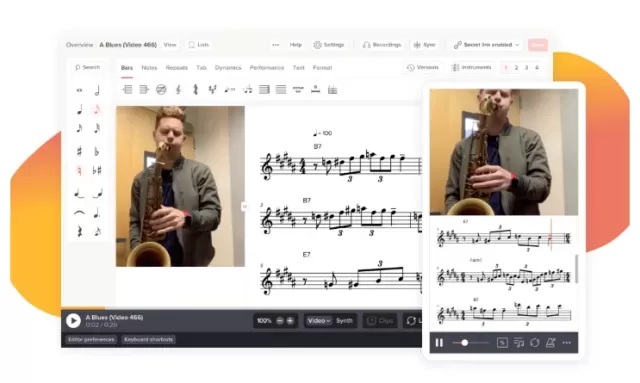
Adrian Holovaty, the creator of the popular web development framework Django and the founder of Soundslice, a music education platform, recently encountered an unexpected issue: strange images of ChatGPT conversations were being uploaded to his site, clogging up the error logs of Soundslice's sheet music scanner.
The sheet music scanner uses AI to convert images of sheet music into interactive, digital versions. However, the incoming images weren't sheet music at all. They were screenshots of ChatGPT sessions containing ASCII tablature, a text-based notation system for guitar music using standard keyboard characters.
Holovaty was initially puzzled. Soundslice wasn't designed to interpret ASCII tab. After investigating, he discovered that ChatGPT was telling users that Soundslice could take these images and translate them into playable audio. This was completely false. The AI was hallucinating, creating a non-existent feature in the minds of potential users.
This presented a problem. While the volume of erroneous uploads wasn't crippling the system, the inaccurate information spread by ChatGPT was leading to disappointed users. Holovaty faced a dilemma: should he simply add disclaimers clarifying that Soundslice couldn't process ASCII tab images, or should he actually build the feature that ChatGPT was promising?
Ultimately, he chose the latter. Despite never having considered supporting ASCII tablature before, Holovaty decided to develop the functionality, feeling somewhat obligated to fulfill the expectation that ChatGPT had created. He found the situation ironic, developing a feature based on misinformation.
The experience raises questions about the responsibility of AI platforms and the impact of their errors. Some commenters have compared the situation to an overzealous salesperson promising features that don't exist, forcing developers to scramble to deliver them. Holovaty agreed with the comparison, acknowledging the humorous side of being guided by AI's misrepresentations.